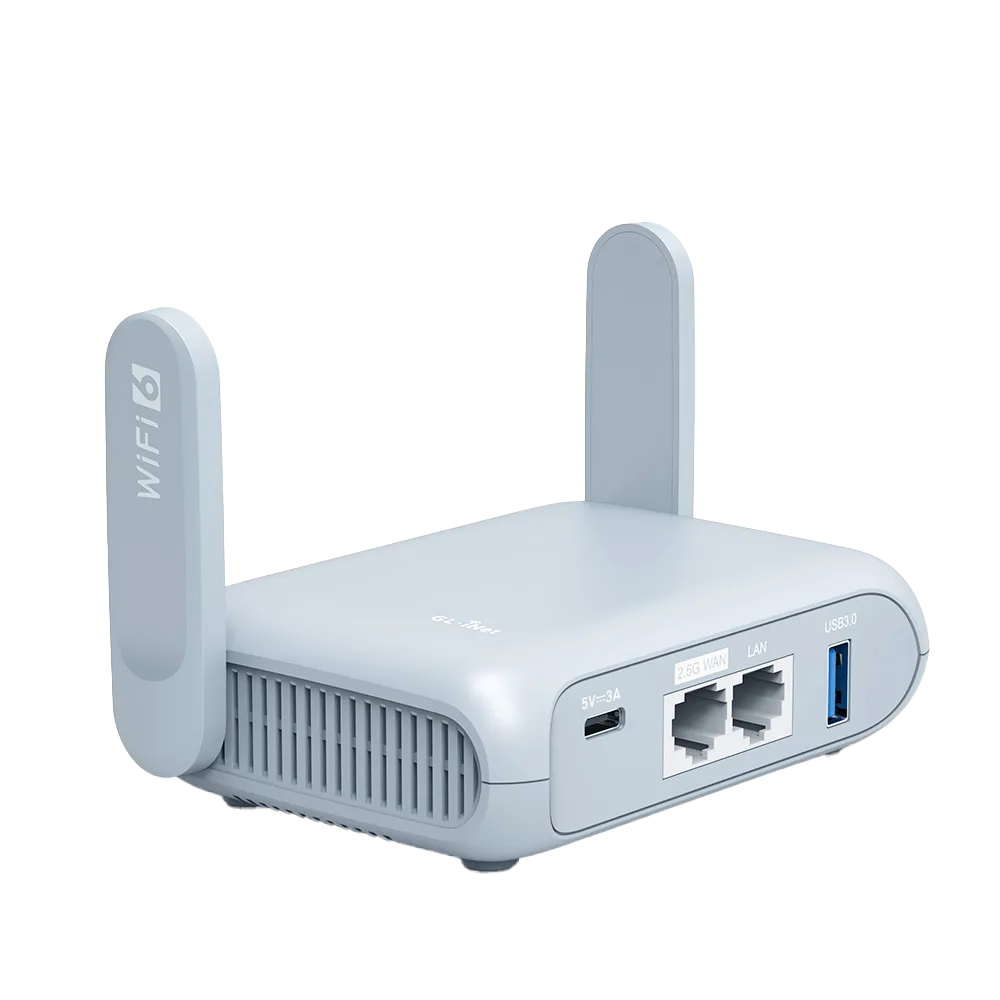
VPN for travel and routers: comparisons, setup and troubleshooting
Pick a VPN for travel or a router, set it up on GL.iNet hardware, check safety and refund terms, and fix connection problems.
Decide where the VPN will run before you compare providers. An app on each device and a VPN on a travel or home router solve different problems: the router route covers devices that cannot run apps and can help with device limits, while per-device apps keep protection when you leave the router behind. The device-limit, kill-switch and WireGuard-vs-OpenVPN guides explain those trade-offs.
Then compare providers on what matters for your use: router support, protocols, account limits, and the published privacy and audit record. Read the head-to-head comparisons for a short list, then the is-it-safe pages, which stick to documented facts such as company ownership and published audits, and the cancel-and-refund pages so you know the exit terms before you pay.
Once you have chosen, follow the router setup guide for your provider. If a connection fails, use the hotel Wi-Fi and connected-but-no-internet troubleshooting guides, which follow each vendor's documented steps in order.
NordVPN and Proton VPN compared from their own pricing, support and terms pages: billing and renewal, simultaneous devices, router configuration files, refund rules, free options and obfuscation.
NordVPN and Surfshark have shared a holding company since 2022. This compares what each documents on device limits, GL.iNet router setup, pricing and renewal terms, trials and refunds, and who should pick which.
Research comparison (vendor documentation and pricing pages; no firsthand testing)Read guide
NordVPN and ExpressVPN compared from their own pricing, router and support pages: how each works on a GL.iNet travel router, simultaneous devices, protocols for restrictive networks, first-term and renewal prices, refunds, and who should skip both.
Proton VPN and Mullvad compared from their own pricing, help and audit pages: account model, flat versus term pricing, device limits, WireGuard setup on GL.iNet routers, free tier, payment and refund rules, and published audits.
A research review of NordVPN from its own support documentation: billing and renewal, the 10-device limit and router slot, manual router configuration, obfuscated servers, refund terms, and who should skip it.
The three documented ways to run NordVPN on a GL.iNet router (built-in WireGuard with an access token, built-in OpenVPN with service credentials, and manual .ovpn upload), plus device slots, kill switch settings and a troubleshooting checklist.
How to generate a Proton VPN WireGuard configuration file, which options each plan unlocks, how to load it into a GL.iNet router, what port forwarding needs, and how to manage several configs.
What NordVPN and Proton VPN say about simultaneous connections, why a router counts once, the per-server catch, and a worked family-trip example with and without a travel router.
What the Proton VPN and NordVPN app kill switches block, how a GL.iNet router kill switch differs, why both stop hotel login pages, and a short IP and DNS leak check.
An ordered troubleshooting path from the vendors own support pages: finish the captive portal, switch protocol, try TCP on port 443 or obfuscation, check the clock and firewall, and know when the network blocks VPNs outright.
Why WireGuard is the default on a GL.iNet travel router, when OpenVPN over TCP is worth the speed loss, how Proton VPN and NordVPN support each on routers, and a decision rule by network type.
The verifiable record on NordVPN: who owns it, where it is based, what it says about logging, the March 2018 breach of a rented server in Finland as reported in 2019, and a checklist for configuring it safely while travelling. Audit reports are not summarised here; read them on NordVPN's audit pages.
Research guide (company documentation and press reporting; no firsthand testing)Read guide
Step-by-step from NordVPN's help centre: turning off auto-renewal, requesting a refund inside the 30-day window, how long the money takes, and why App Store, Google Play and Amazon purchases follow the store's rules instead.
Research guide (NordVPN, Apple and Google help pages; no firsthand testing)Read guide
NordVPN's own troubleshooting order for a connected tunnel with no internet: server and protocol changes, DNS and Real-time protection, kill switch and captive portals, then GL.iNet router fixes kept separate from device-app fixes.
The verifiable record on Proton VPN: Swiss legal framework as Proton documents it, open-source apps, annual Securitum no-logs audits, transparency report figures, and how the 2021 Proton Mail IP case differs from the VPN.
Only the discounts Proton publishes on its own pricing page, checked on 30 October 2026: the two-year VPN Plus and Proton Unlimited prices, what renewal costs, a worked cost table, and why no coupon code is needed.
Proton's documented steps to cancel on the web, iPhone and Android, the 30-day refund rule and its exceptions, credits versus refunds, and a checklist for router WireGuard configurations after you drop to Free.
Twenty-nine VPN terms defined from Proton VPN, NordVPN, WireGuard and GL.iNet documentation, each marked as an app feature, a router feature or both, with notes for GL.iNet travel routers.
A line-by-line walk through a WireGuard .conf file using the official wg and wg-quick manuals, how a Proton VPN config differs from a home-server config made on a GL.iNet router, and the edits travelers actually make.
How VPN obfuscation works at a high level, what Proton's Stealth protocol and NordVPN's NordWhisper-based obfuscated servers are, where each one runs, why router setups usually cannot use them, and when a traveler actually needs one.
How Proton VPN's Secure Core routes traffic through its own servers in Switzerland, Iceland and Sweden, which plans include it, why Proton itself says it adds a lot of latency, how it works on routers, and when a traveler should turn it on.
A day-one leak check for a VPN running on a GL.iNet travel router: what DNS, IPv6, WebRTC and tunnel-down leaks are, which router settings control each one, the free test pages to use, and a pass/fail checklist with fixes.
Refund windows and exclusions for NordVPN, Proton VPN, ExpressVPN, Surfshark and Mullvad in one table, taken from each provider's terms or help pages: renewals, app-store purchases, cash and crypto, add-ons and processing times.
How to move a GL.iNet router from an OpenVPN profile to WireGuard without losing a working fallback: get the WireGuard config from NordVPN or Proton VPN, run both side by side, test, then trim OpenVPN down to one TCP profile for networks that block UDP.