A faster headline can hide the wrong port layout
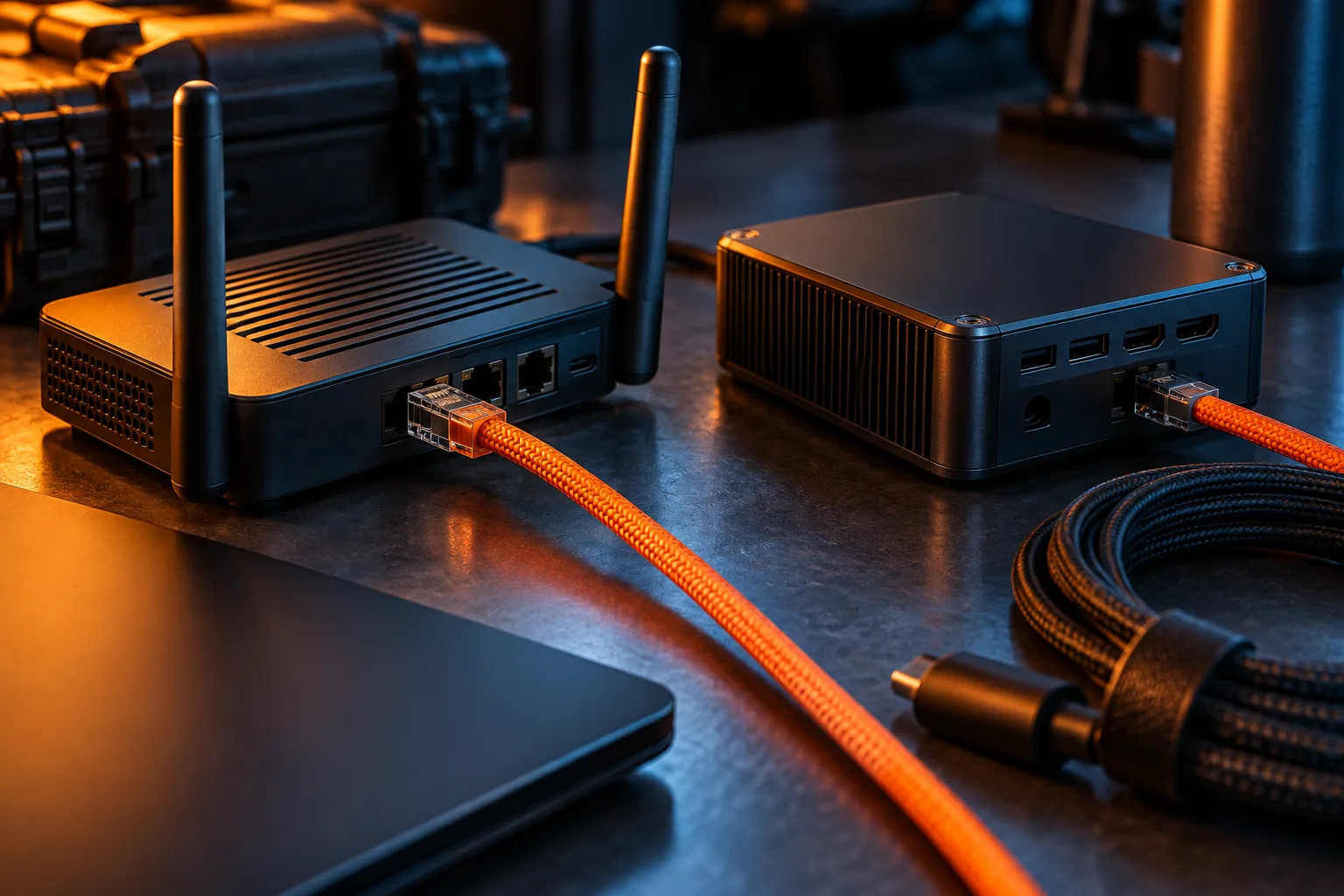
GL.iNet lists Beryl AX with one 2.5GbE WAN port, one gigabit LAN port and USB 3.0. Opal lists one WAN and two LAN ports at gigabit speed, plus USB 2.0. Both list USB-C 5V/3A power input. The distinction is tangible: two wired clients fit Opal's default LAN layout, while Beryl AX needs another supported arrangement or additional equipment. [1][2]
We would not pay for Beryl AX merely to repeat a slow hotel connection. Its documented Wi-Fi 6 radio and faster WAN interface are capabilities, not a promise about the hotel's upstream service. An internet outage at the hotel remains an upstream problem.
The comparison that changes the purchase
| Requirement | Opal | Beryl AX | Our judgment |
|---|---|---|---|
| Two wired LAN clients | Two LAN ports | One LAN port | Opal has the simpler listed port layout |
| Wi-Fi generation | Wi-Fi 5 (802.11ac) | Wi-Fi 6 (802.11ax) | Shortlist Beryl AX if your local clients can use it |
| Wired uplink | Gigabit WAN | 2.5GbE WAN | Beryl AX only gains from a suitable upstream path |
| USB peripheral | USB 2.0 | USB 3.0 | Verify the exact supported device; USB version alone is insufficient |
| One laptop already online | Adds another device to maintain | Adds another device to maintain | Keep the current connection |
Our three buyer verdicts
For a frequent traveler carrying several devices and a known travel-LAN workflow, Beryl AX is our preferred specification shortlist if one wired client is enough. The preference rests on interfaces and radio generation, not a claim of easier hotel login or measured VPN throughput.
For a small two-client wired kit, Opal can be the more sensible fit even though its radio generation is older. Compare current delivered prices and the cost of any switch or adapter the alternative requires. We do not have evidence that either model has better long-term reliability.
For a single-device trip, our default is no new router. Try the venue's permitted direct connection first. If cellular tethering is already included in your plan and works at the destination, evaluate that existing fallback before buying network hardware. Coverage, data limits and venue permissions remain separate checks.
What we dislike about the usual travel-router pitch
A headline maximum Wi-Fi rate does not describe a hotel's usable bandwidth. A supported VPN protocol does not establish the throughput to your server. A USB-C socket does not establish that a random low-output charger will meet the stated power requirement. We would reject a comparison that turns any of these into an observed result.
Both candidates add firmware, power, cables and another troubleshooting interface to a travel bag. That overhead is justified when it removes repeated setup work for multiple clients. It is a poor trade when it simply moves a login problem from the laptop to the router.
The acceptance test before the trip
Draw your WAN and client connections, count ports, and confirm the exact power supply. On a network you are authorized to use, verify each client, reconnect after a restart, and rehearse the documented login flow. Test your actual remote-work destination if that is the purpose of the kit.
This is a proposed test, not a test result. Our separate local-gateway observation used one Mac and does not benchmark either product. Official specifications were checked on 20 September 2026; live stock, regional accessories and checkout prices still need confirmation.
Sources & verification
Product details and prices can change. Check the linked provider before buying.
- GL.iNet Beryl AX official specifications Accessed 2026-09-20
- GL.iNet Opal official specifications Accessed 2026-09-20
Sources link directly to providers. Product buttons may use separately labeled affiliate links. Read our disclosure.